
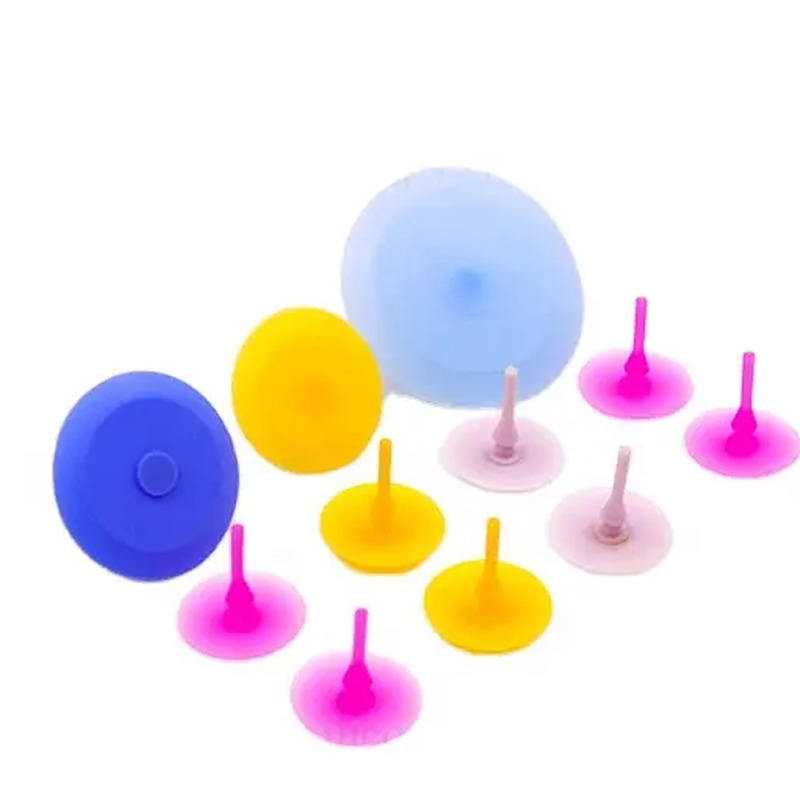
Are you specifying a one-way valve for a new product and weighing options for reliability, manufacturability, and cost? At Siliconepartner, we get that question all the time from design engineers and procurement teams. As a manufacturer that moves hundreds of valve designs from CAD to validated production, we’ll explain what a one way silicone valve is, how it works, why it’s favored in medical, food, and consumer applications, and how modern manufacturing methods — including ketchup valve injection molding and overmolding — turn concept into a leak proof valve. If you want a practical, production-ready recommendation or a quote for a custom run, read on — or contact our engineering team for a free DFM review as part of our custom service.
What is a Silicone One-Way Valve?
A silicone one-way valve (also called an elastomeric check valve) is a passive fluid-control element that permits flow in a single direction while preventing backflow. Instead of moving metal parts or springs, these valves use a flexible silicone membrane (duckbill, umbrella, or flap geometry) that deforms under forward pressure to allow passage and reseats instantly when pressure reverses. Because silicone is flexible, chemically stable, and biocompatible in medical grades, these valves are widely used where cleanliness, low cracking pressure, and compact packaging matter.
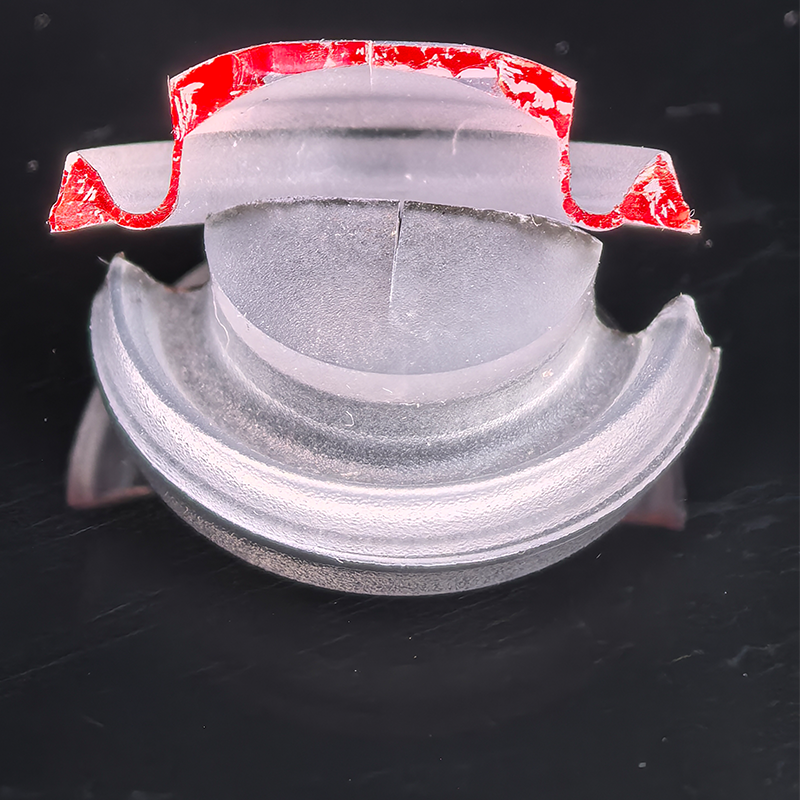
How It Works — the basics
The operating principle is elegantly simple:
- In the sealed state, the silicone lips or skirt sit closed against the seat, forming a continuous seal.
- When forward pressure exceeds the design cracking pressure, the membrane deforms or lifts to open a flow path.
- When pressure drops or reverses, elasticity returns the membrane to its seated position, restoring a tight seal.
Different geometry choices control cracking pressure, flow characteristic, and response time: duckbill lips open quickly and are good for moderate flows; umbrella diaphragms enable ultra-low cracking pressures and silent operation; flaps combine features for higher differential pressures.
Key Benefits — why engineers choose silicone valves
- Low cracking pressure: Some designs open below 1–2 psi, ideal for microflow medical devices and squeeze dispensers.
- True leak resistance: Properly designed silicone valves are inherently leak proof valve candidates for many low-pressure applications.
- Durability: Silicone resists aging, performs across broad temperatures, and survives millions of cycles when properly formulated.
- Biocompatibility & safety: Medical-grade silicones meet USP/FDA requirements for patient-contact use.
- Design & integration flexibility: Valves can be molded as standalone parts or overmolded into housings to reduce assembly steps.
- No metal springs or moving parts: Fewer wear items, quieter operation, and simpler sterilization/cleaning.
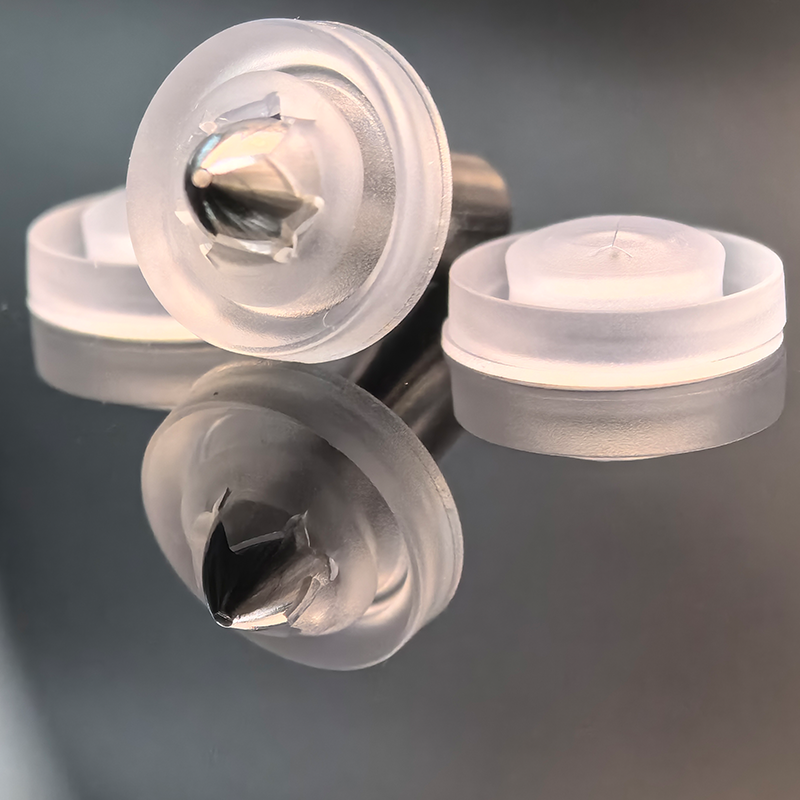
Materials and Typical Properties
Choosing the right elastomer determines chemical compatibility, temperature range, and durability. Below is a compact comparison.
| Property / Material | Silicone (VMQ) | EPDM | Nitrile (NBR) | FKM (Viton®) |
|---|---|---|---|---|
| Typical Temp Range | -60°C to +230°C | -50°C to +150°C | -30°C to +100°C | -20°C to +200°C |
| Chemical Resistance | Good (water, mild acids) | Excellent (water, steam) | Excellent (oils/fuels) | Best (harsh chemicals) |
| Biocompatibility | High (medical grades) | Moderate | Low–Moderate | Moderate–High |
| Compression Set | Excellent | Very Good | Good | Excellent |
| Typical Use Cases | Medical, food dispensers | Hot water systems | Fuel/oil lines | Chemical processing |
| Cost (relative) | Medium | Low | Low | High |
Silicone is the go-to for medical and food contact valves; FKM for aggressive chemistries; EPDM/NBR when specific fluids or temperatures dictate an alternative.
Common Valve Geometries (and when to use them)
| Type | How it looks | Strengths | Typical uses |
|---|---|---|---|
| Duckbill | Slit-like lips | Fast response, simple | Medical lines, beverage dispensers |
| Umbrella | Dome/skirt that lifts | Ultra-low cracking pressure, silent | Vacuum circuits, breath flow, ventilation |
| Flap | Hinged elastic flap | Higher differential pressure | Industrial vents, larger flow |
| Ball-coated | Silicone-coated ball | Robust sealing at higher pressures | Specialty high-pressure check valves |
Manufacturing: From Prototype to Production
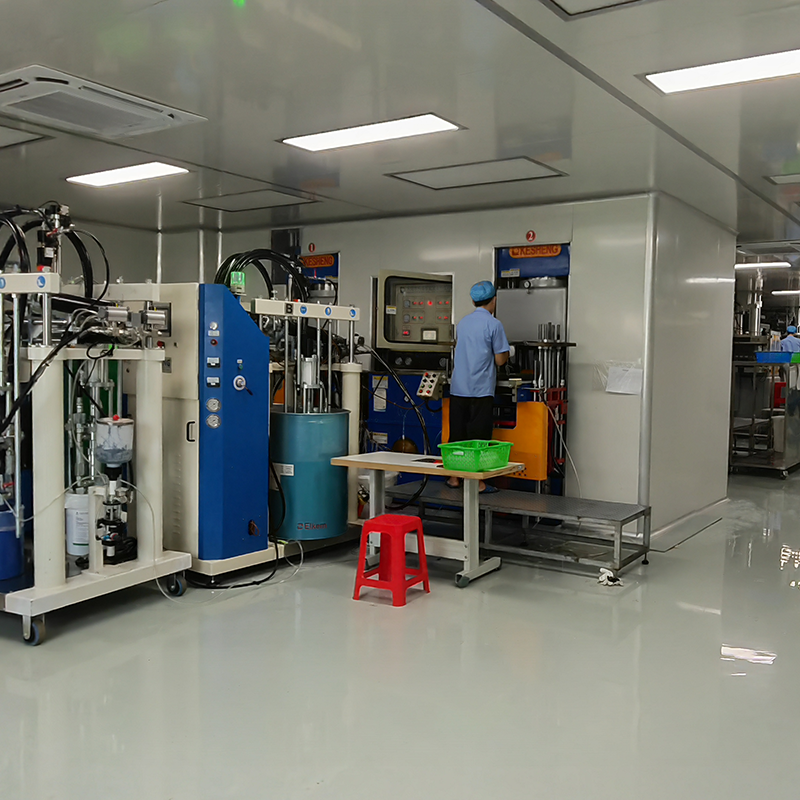
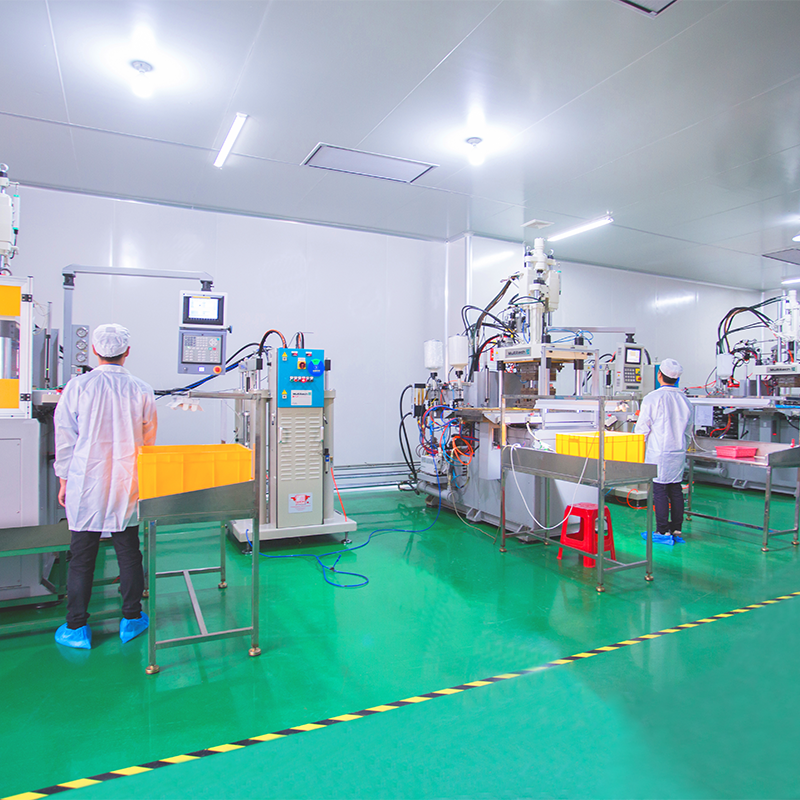
LSR injection molding is the industry standard for high-volume silicone valves. Liquid Silicone Rubber enables tight tolerances, repeatability, medical-grade purity, and high cavity counts for cost-efficient runs. For condiment dispensers, ketchup valve injection molding is a typical application: the valve and the dispensing head can be molded and post-cured to food-safe standards in the same production flow.
Key manufacturing advantages we provide as a manufacturer:
- High precision tooling: tight wall-thickness control to maintain consistent cracking pressure.
- Cleanroom-capable molding lines: for medical device valves.
- Overmolding / insert molding: integrate the valve onto a rigid housing, creating a monolithic assembly that eliminates assembly labor.
- Full validation services: pressure/leak tests, life-cycle cycling, and chemical compatibility checks.
- Custom service: tuned geometries and material grades per OEM spec.
Design considerations for reliable, leak-proof performance
- Cracking pressure tolerance: specify an acceptable range; production variability comes from tooling and material batch differences.
- Wall thickness control: uniform thickness vs local reinforcement affects elasticity and life.
- Surface finish of seating area: roughness can compromise sealing—mold polish matters.
- Mounting and support: avoid over-stretch during installation; design snap-in bosses or seats for consistent compression.
- Thermal/sterilization limits: select cured silicone grades for autoclave or gamma sterilization if needed.
- Overmold bonding: plan compatible substrate materials and adhesion strategies to avoid delamination.
Quality control and testing
A manufacturer should validate valves with these standard tests:
- Static leak test at specified backpressure.
- Dynamic leak test under cycling and pulsatile flow.
- Cracking pressure distribution measured across production lots.
- Life cycle test (million-cycle runs where appropriate).
- Chemical soak tests for intended fluids.
- Biocompatibility / food-contact certificates when required.
Maintenance and troubleshooting (quick reference)
| Symptom | Likely cause | Immediate fix | Long-term prevention |
|---|---|---|---|
| Forward leakage | Lip wear or debris | Clean, replace if damaged | Upstream filtration; gentler materials |
| Valve stuck closed | Stiction after storage | Cycle manually or with low pressure | Store relaxed; anti-stiction coatings |
| Lip tearing at install | Over-stretch | Replace; verify installation tool | Design proper snap-fit geometry |
| Discoloration/cloudiness | Sterilization overuse | Inspect material grade | Use peroxide/platinum-cured silicone; limit cycles |
Applications where silicone one-way valves shine
- Medical devices: breathing circuits, respiratory valves, infusion and drainage lines.
- Food & beverage: squeeze bottles, condiment dispensing (ketchup valve injection molding), beverage heads.
- Consumer products: portable dispensers, home healthcare devices.
- Small pneumatic/vacuum controls: low-pressure manifolds, air logic devices.
- Laboratory & analytical systems: single-use flow paths, sterile sampling.
Choosing a supplier — why the manufacturer matters
When you engage a supplier, look for:
- Proven LSR capability with medical/food-grade experience.
- DFM and prototyping support to tune crack pressure and flow.
- Documented quality systems (ISO 13485 for medical, IATF 16949 for automotive where applicable).
- One-stop service — tooling, molding, post-cure, testing, and assembly to reduce handoffs and risk.
- Custom service offerings to adapt valve geometry, hardness (durometer), and material to your exact spec.
At Siliconepartner we combine tooling expertise, in-house molding, and test labs so you get a production-ready leak proof valve faster and with lower risk.
Final thoughts — how Siliconepartner can help
If you need a dependable one way silicone valve, a molded dispensing head via ketchup valve injection molding, or a tailored valve assembly for a medical, food, or consumer product, we’re ready to partner. Our custom service includes DFM review, prototype tooling, LSR molding, validation testing, and scalable production runs. Contact Siliconepartner to discuss performance targets, material constraints, and volume expectations — we’ll deliver a manufacturable design and transparent OEM quote that gets your product reliably into the field.
Want us to review your valve spec or provide a sample run? Reach out and we’ll prioritize a practical roadmap from prototype to production.