

At Siliconepartner, we help brands, buyers, and product developers choose the right molding method for custom silicone products based on performance, cost, and production goals. When a project moves from concept to manufacturing, one of the most important decisions is whether compression molding or injection molding is the better fit. The wrong choice can increase tooling cost, slow down production, or create inconsistent parts. The right choice can improve quality, reduce waste, and support a smoother launch.
One-Sentence Definition
Compression molding and injection molding are two different manufacturing processes used to form silicone and plastic parts, with compression molding shaping material under pressure inside the mold and injection molding forcing material into the mold under high pressure.
Quick Answer
Choose compression molding when your part is simple to moderate in complexity, your material performance matters most, and you are producing stable volumes of silicone parts.
Choose injection molding when your product needs faster cycle times, tighter repeatability, more complex geometry, and scalable mass production.
Compression Molding vs Injection Molding at a Glance
| Factor | Compression Molding | Injection Molding |
|---|---|---|
| Tooling cost | Usually lower to moderate | Usually higher |
| Production speed | Slower | Faster |
| Part complexity | Moderate | High |
| Material waste | Lower in some cases | Efficient in mass production |
| Precision | Good | Very strong |
| Best for | Silicone parts, simpler structures | Complex parts, high-volume runs |
Compression Molding Overview
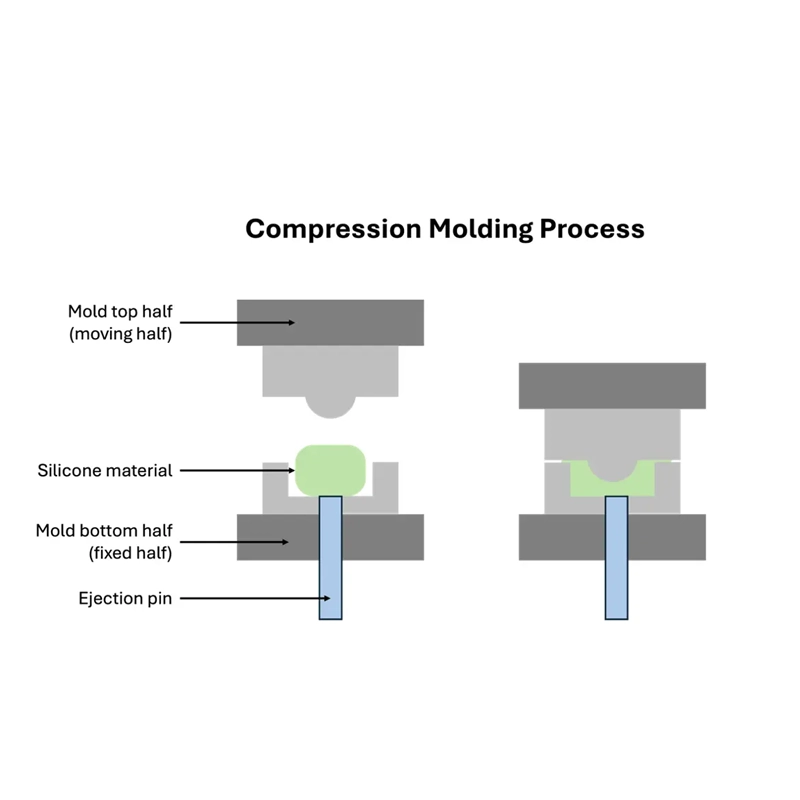
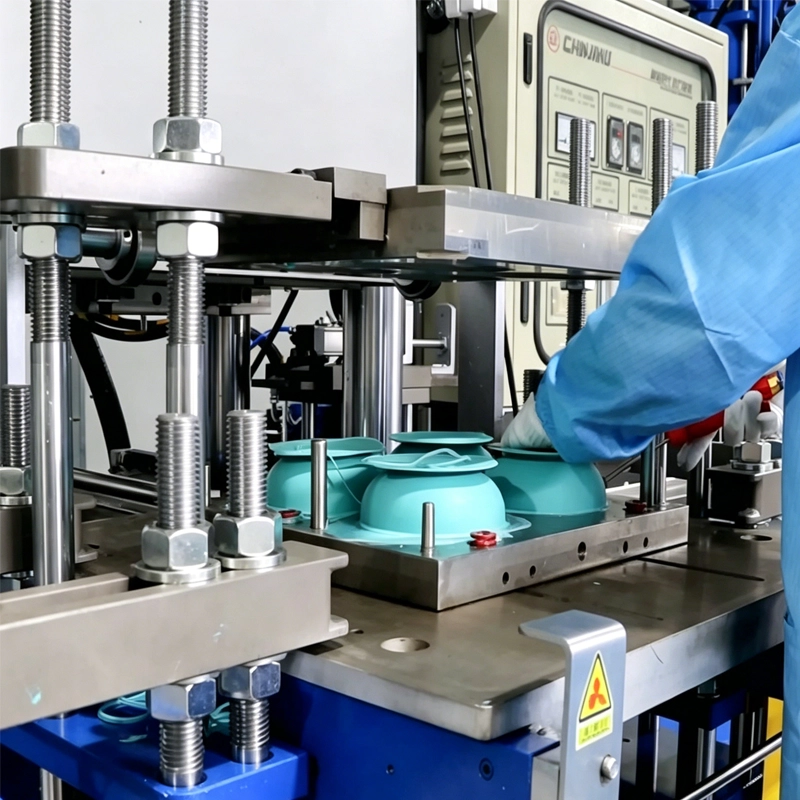
Compression molding is a process where a measured amount of material is placed into an open mold cavity and then compressed into shape under heat and pressure. It is widely used for silicone and rubber products because it is stable, practical, and well suited to many functional parts.
This process is often selected by a manufacturer when the product does not require extremely complex geometry but does require dependable material behavior. For many custom silicone products, compression molding remains one of the most proven and cost-effective methods.
Advantages of Compression Molding
Compression molding has several strengths:
- Stable and proven process
- Good for silicone applications
- Suitable for many functional parts
- Often practical for medium-volume production
It is especially useful when the part needs reliable material performance and does not justify the higher tooling complexity of injection molding.
Limitations of Compression Molding
Compression molding is not always the fastest option. Cycle times are usually longer, and very detailed structures can be harder to produce. If your design requires multiple thin ribs, undercuts, or very high repeatability across large volumes, compression molding may not be the most efficient choice.
Injection Molding Overview
Injection molding works by heating material and forcing it into a closed mold under pressure. It is one of the most widely used processes in plastic manufacturing, and it can also be used for silicone depending on the product design and material system.
For a factory focused on high-volume output, injection molding is often attractive because it supports speed, automation, and repeatability. It is commonly chosen for parts that need consistent dimensions and complex features.
Advantages of Injection Molding
Injection molding offers clear benefits:
- Fast cycle time
- Strong repeatability
- Suitable for complex designs
- Ideal for mass production
When a product must be produced at scale with tight tolerances, injection molding often provides the best long-term manufacturing efficiency.
Limitations of Injection Molding
Injection molding usually requires higher tooling investment. It may not be the best choice for simpler silicone parts where the design does not justify the added mold complexity. For some custom silicone products, especially those with straightforward geometry, compression molding may deliver better value.
Which One Should You Choose?
The best process depends on the product shape, material, quantity, and performance expectations.
Ask these questions:
- Is the part simple or complex?
- Is the product silicone or plastic?
- Is speed more important than tooling investment?
- Do you need premium finish and consistent repeatability?
If the product is simple or medium in complexity and material performance is the top priority, compression molding is often the better fit. If the product has detailed geometry, requires very high volume, or needs faster output, injection molding is usually the stronger option.
The Difference Between Compression Molding and Injection Molding
People often compare these two processes because they can both be used in silicone manufacturing, but they are not interchangeable.
Compression molding is generally better for:
- silicone parts
- lower to medium production volumes
- products that need stable material behavior
- projects where tooling cost should stay controlled
Injection molding is generally better for:
- complex part designs
- high-volume programs
- parts that require excellent repeatability
- products that need efficient mass production
In other words, compression molding is often a practical solution for silicone products, while injection molding is often the better choice when speed and complexity matter more.
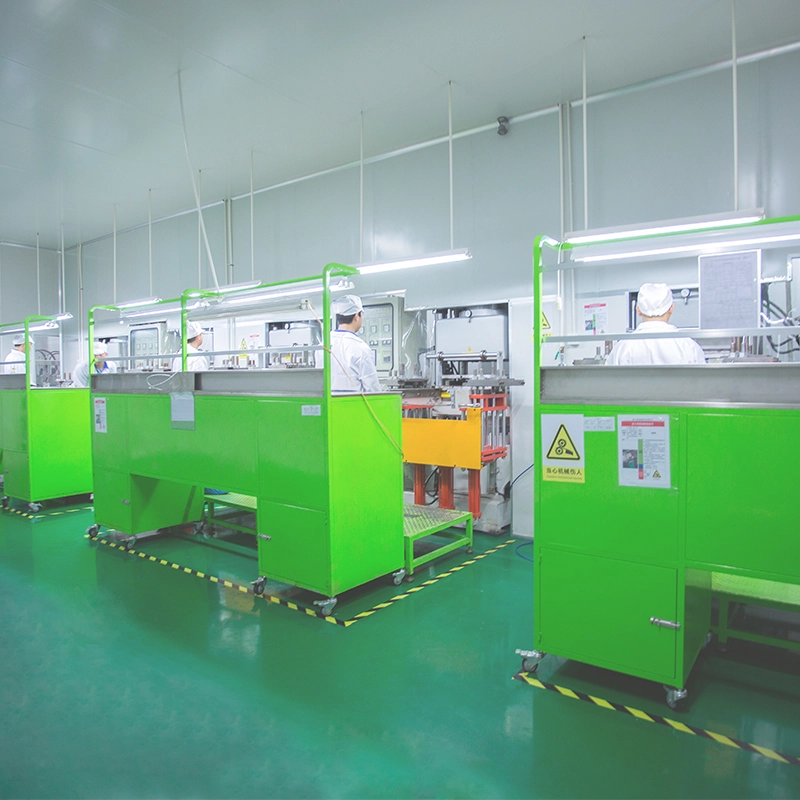
Manufacturing Advice for Buyers
The right manufacturing method should always be chosen together with product design. A good manufacturer or trusted suppliers should review the following before production begins:
- Material behavior
- Product size
- Wall thickness
- Tolerance requirements
- Cycle time
- Cost target
This is where early engineering support matters. A strong factory partner can help you avoid choosing a process that looks good on paper but becomes expensive or unstable in production. For custom silicone products, the best results usually come from matching the part design to the correct molding method from the very beginning.
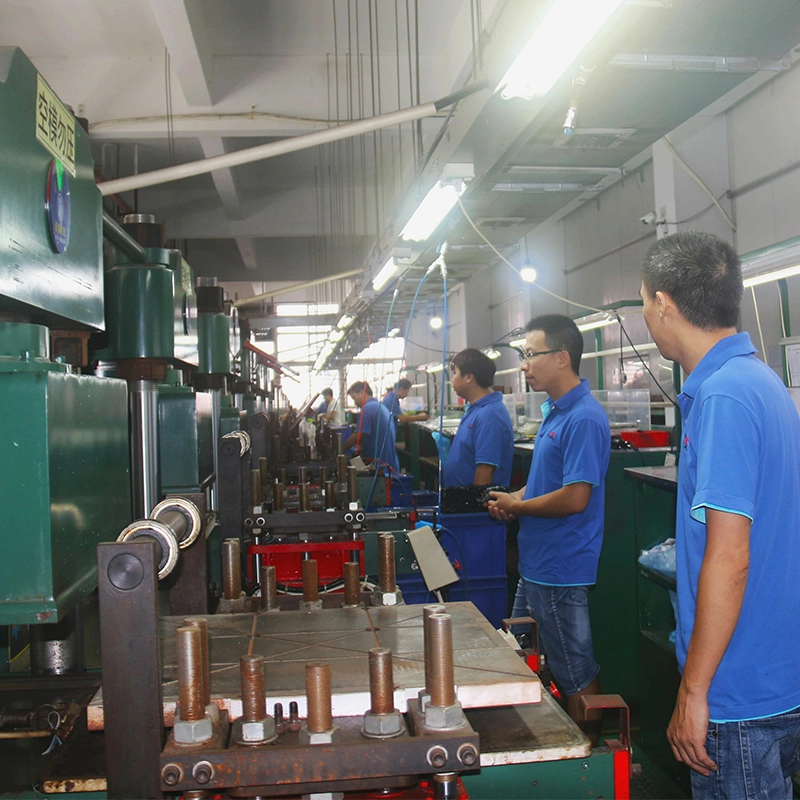
Final Recommendation
Compression molding is often the better choice for silicone parts with practical structures, stable volumes, and strong material requirements. Injection molding is usually the better choice for complex, high-volume products that need efficient mass production and tighter repeatability.
At Siliconepartner, we work closely with customers to evaluate both options and recommend the best path for each project. As an experienced manufacturer and factory supporting global suppliers, we provide complete development support for custom silicone products, from material selection and mold design to production and quality control.
If you are developing a new product and are not sure which molding process is right, share your drawings, target volume, and performance goals with us. We would be glad to review your project and help you choose the process that fits your product, budget, and market best.