

Industry Background
The global silicone elastomer market continues to expand rapidly, driven by stringent demands in the medical device, automotive, and consumer electronics sectors. According to recent data from Grand View Research, the global silicone market is expected to witness significant growth, pushing OEM brands to demand tighter tolerances and zero-defect production runs.
However, silicone rubber—whether Liquid Silicone Rubber (LSR) or High Consistency Rubber (HCR)—is a complex thermoset material. Its low viscosity during injection and unique thermal expansion properties make it highly susceptible to specific manufacturing defects if tooling and process parameters are not strictly controlled. For B2B procurement managers and product engineers, understanding these defects is the first step in assessing an OEM partner’s manufacturing capabilities and avoiding costly supply chain disruptions.
1. Flash (Over-molding)
Flash is one of the most persistent challenges in silicone molding. Because LSR has a viscosity comparable to water at high temperatures, it can seep into microscopic gaps in the mold, creating a thin film of excess material along the parting lines.
Identifying Flash in Silicone Parts
Flash appears as an ultra-thin, unwanted flap of silicone attached to the edges of the molded component. While sometimes purely cosmetic, flash on critical sealing components (like O-rings or medical gaskets) can compromise the functional integrity of the final assembly.
Root Causes: Tooling Precision and Clamping Force
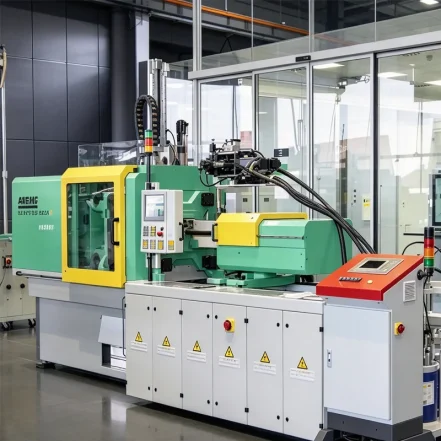
The primary cause of silicone flash is inadequate tooling tolerances. If the mold halves do not mate perfectly, or if the clamping force of the injection machine is insufficient to withstand the injection pressure, the low-viscosity silicone will escape the cavity. Tool wear over extended production runs also exacerbates this issue.
Engineering Solutions for Flash Prevention
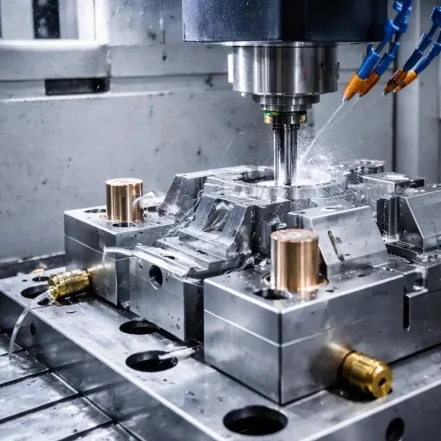
Preventing flash requires a zero-tolerance approach to mold making. Engineers must utilize CNC machining to achieve mold tolerances within ±0.005mm. Furthermore, maintaining optimal clamping force and implementing regular tool maintenance schedules are non-negotiable. For buyers sourcing highly complex parts, working with a partner that integrates precision Tooling and Mold Making is essential to ensure long-term dimensional stability.
2. Short Shots (Incomplete Filling)
A short shot occurs when the silicone material fails to completely fill the mold cavity before curing, resulting in an incomplete part with missing features or undefined edges.
Recognizing Incomplete Cavities
Short shots are typically identified by smooth, rounded edges where the design specifies sharp corners, or by entirely missing sections in thin-wall areas. This defect immediately renders the part unusable.
Material Flow and Venting Issues
Silicone cures rapidly once it hits the heated mold. If the injection speed is too slow, or if the injection pressure is too low, the material cross-links (cures) before reaching the extremities of the cavity. Additionally, inadequate mold venting can trap air, creating a pocket that physically blocks the advancing silicone flow.
Process Optimization to Ensure Complete Fills
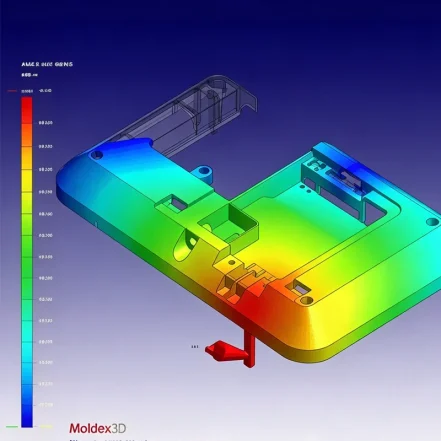
Engineers prevent short shots by conducting mold flow analysis during the Design for Manufacturability (DFM) phase. This determines the optimal gate locations and venting structures. Adjusting the injection speed profile and ensuring uniform mold heating are critical steps.
OEM Product Recommendation:
For OEMs developing critical components such as medical seals or automotive connectors, we highly recommend our Custom Silicone Components. The advantage for B2B buyers: We utilize advanced vacuum-assisted molding technology and micro-venting designs specifically engineered to eliminate short shots and air traps. This ensures 100% material fill even in micro-molding applications or complex geometries with varying wall thicknesses, significantly reducing your rejection rates and compliance risks.
3. Air Traps, Bubbles, and Voids
Air traps manifest as bubbles within the silicone wall or voids on the surface. In transparent optical silicone or medical-grade components, bubbles are both a cosmetic failure and a structural hazard.
The Impact of Voids on Structural Integrity
A void acts as a stress concentrator. Under dynamic mechanical load, a silicone part with internal bubbles is highly susceptible to premature tearing or compression set failure, failing to meet standards like ASTM D395.
Vacuum System and Tooling Design Flaws
Bubbles occur when air is mixed into the raw material during preparation, or when ambient air inside the mold cavity cannot escape fast enough during injection.
Effective De-airing and Venting Strategies
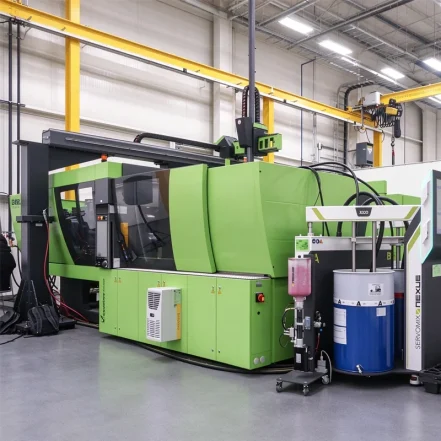
To eliminate voids, manufacturers must implement a multi-stage approach. First, raw silicone must be thoroughly degassed using vacuum mixing equipment. Second, integrating a vacuum chamber into the Liquid Silicone Rubber Injection Molding process evacuates the air from the mold milliseconds before injection begins.
4. Burn Marks (Scorching)
Burn marks appear as dark, discolored spots on the surface of the silicone part, often near the end of the fill path or at venting locations.
Causes of Silicone Degradation
Unlike thermoplastics, silicone cures via heat. If the trapped air inside the mold is compressed too rapidly by the advancing silicone front, it superheats (the diesel effect), scorching the surrounding silicone material.
Temperature Control and Injection Speed Adjustments
Preventing burn marks requires precise control over the injection velocity profile. Engineers must slow down the injection speed precisely as the material reaches the venting areas. Optimizing the mold temperature distribution ensures the material cures evenly without localized overheating.
5. Sink Marks and Dimensional Instability
Sink marks are shallow depressions on the surface of thicker sections of a molded part. While less common in silicone than in plastics, dimensional instability remains a critical challenge.
Shrinkage Rates of Silicone Rubber
Silicone rubber has a relatively high thermal expansion coefficient. As the part cools down from the vulcanization temperature (typically 160°C – 200°C) to room temperature, it shrinks. Variations in wall thickness lead to uneven cooling and differential shrinkage rates, causing sink marks or warping.
Mold Cooling and Pressure Management
Preventing dimensional instability requires strictly adhering to uniform wall thickness during the part design phase. Furthermore, engineers must precisely calculate the shrinkage rate (often between 2% to 3%) and over-cut the steel mold accordingly. Adhering to standards such as ISO 3302 helps maintain expected dimensional tolerances.
Silicone Partner Perspective: Evolving Quality Standards in OEM Manufacturing
Based on our recent engineering reviews with global automotive and medical device brands, we observe a distinct shift in procurement requirements. Buyers are no longer satisfied with standard visual AQL (Acceptable Quality Limit) inspections.
Instead, engineering teams are increasingly mandating automated dimensional validation and strict adherence to process capability index (Cpk) requirements > 1.33. They require documented proof that the manufacturer’s Quality Control system can proactively monitor injection pressure, mold temperature, and curing time in real-time. By catching process deviations before they manifest as flash or voids, manufacturers can guarantee consistency across million-part production runs, ensuring compliance with ISO 13485 and ISO 9001 standards.
Practical Decision Framework for B2B Buyers
Before finalizing your next OEM silicone manufacturing contract, evaluate potential partners using this engineering checklist:
-
Tooling Capability: Do they machine their own molds in-house to control tolerances and prevent flash?
-
Vacuum Technology: Do their molding presses utilize automated vacuum systems to eliminate air traps in complex parts?
-
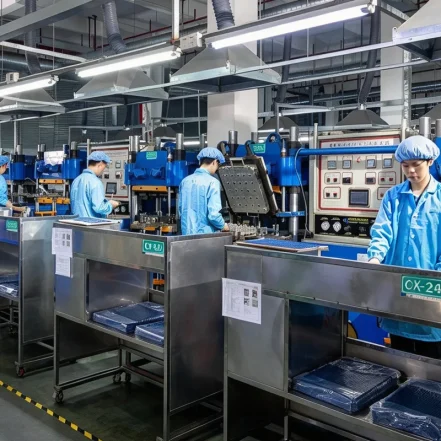
Process Monitoring: Can their equipment track and record injection parameters for every shot to ensure traceability?
-
Material Handling: How do they manage LSR mixing and dosing to prevent cross-contamination and curing inconsistencies?
What This Means for Your Brand’s Supply Chain
Molding defects are not just manufacturing inconveniences; they are direct threats to your product’s lifecycle and your brand’s reputation. A partner that relies on manual deflashing or secondary rework to fix defects introduces hidden labor costs and quality variations into your supply chain.
By prioritizing a manufacturing partner who engineers out defects during the tooling and DFM stages, brands can accelerate their time-to-market, ensure regulatory compliance, and stabilize unit costs over the life of the product.
Conclusion
Silicone molding is a high-precision process where minor deviations in temperature, pressure, or tooling tolerances lead to significant defects like flash, short shots, and voids. For global brands, the key to successful product development lies in partnering with an OEM manufacturer that treats defect prevention as an engineering science rather than a reactive QC sorting process. By investing in precision tooling, vacuum-assisted molding, and strict process controls, manufacturers ensure that every silicone component meets the highest standards of performance and reliability.
FAQ
How do tooling tolerances affect silicone flash?
Due to the extremely low viscosity of heated LSR, any gap in the mold parting line exceeding 0.01mm will allow material to escape, creating flash. High-precision CNC tooling is mandatory to prevent this.
What is the acceptable shrinkage rate for liquid silicone rubber?
LSR typically shrinks between 2% and 3% upon cooling. However, the exact rate depends on the specific material grade, curing temperature, and part geometry. Molds must be precisely oversized to account for this.
How do manufacturers control cross-contamination in medical silicone molding?
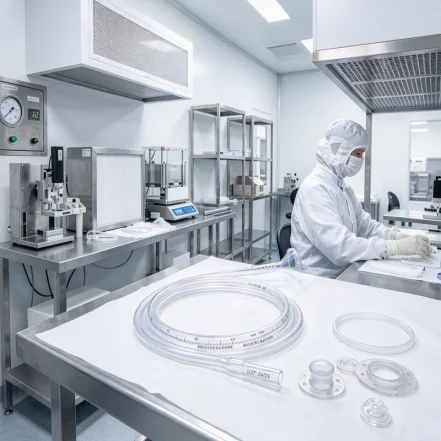
To meet ISO 13485 and FDA requirements, manufacturers utilize closed-loop LSR dosing systems and operate within cleanroom environments, ensuring the raw material is never exposed to ambient dust or airborne contaminants.
Can silicone molding defects be reworked or repaired?
Unlike thermoplastics, cured silicone is a thermoset material and cannot be melted down or recycled. While minor flash can sometimes be removed mechanically (deflashing), structural defects like voids, short shots, or burn marks render the part a complete loss.
About the Author
David is a Senior Silicone Tooling Engineer at Silicone Partner with over 15 years of experience in liquid silicone rubber (LSR) and high consistency rubber (HCR) manufacturing.
He specializes in mold flow analysis, precision tooling design, and process optimization for zero-defect manufacturing. With extensive experience working with global brands and distributors in the medical, automotive, and industrial sectors, David focuses on translating complex engineering challenges into scalable, reliable manufacturing solutions.
References
-
Grand View Research. “Silicone Market Size, Share & Trends Analysis Report.”https://www.grandviewresearch.com/industry-analysis/silicone-market
-
International Organization for Standardization (ISO). “ISO 3302-1:2014 Rubber — Tolerances for products.”https://www.iso.org/standard/66205.html
-
ASTM International. “ASTM D395 – Standard Test Methods for Rubber Property—Compression Set.”https://www.astm.org/d0395-18.html
Why Global Brands Choose Silicone Partner
✔ 15+ Years of Custom Silicone Molding Experience
✔ In-house Precision Tooling and Mold Making
✔ Advanced LSR and Solid Silicone Capabilities
✔ ISO-Certified Quality Control and Cleanroom Production
✔ Professional DFM Engineering Support
✔ Reliable OEM Partner for Medical, Automotive, and Consumer Markets
Whether you need custom LSR components, complex over-molded parts, or highly regulated medical seals, Silicone Partner provides engineering-driven manufacturing support from concept to mass production.Contact our team to discuss your next custom silicone project.