
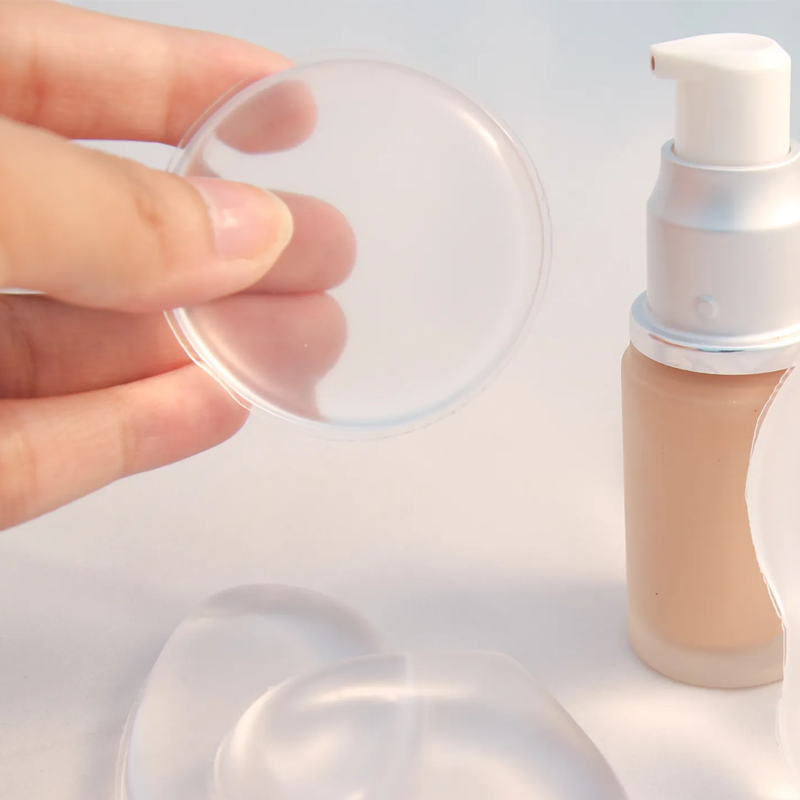
Thanks — if you’re researching silicone for beauty and personal-care products, you’ve come to the right place. At Siliconepartner, our factory brings deep hands-on experience as a dedicated silicone manufacturer, and we work with brands to translate product ideas into production-ready components. Below is a practical, manufacturer-level breakdown of how silicone is used across the beauty industry, why it’s technically advantageous, and what to expect when you partner with a supplier for custom service and high quality production.
Why silicone matters for beauty products
Silicone has rapidly become the material of choice in modern beauty tools, devices, and packaging because it uniquely combines tactile comfort, chemical stability, and hygienic performance. Unlike many plastics or natural rubbers, silicone maintains its properties across a wide temperature range, resists oils and cosmetics, and can be formulated to a wide range of durometers (softness/hardness). For brands, that means products that feel premium, last longer, and offer predictable performance under repeated exposure to creams, serums, and cleaning agents.
Key technical advantages:
- Biocompatibility & hypoallergenic performance — medical-grade silicone (often platinum-cured LSR) is well suited for prolonged skin contact and is far less likely to cause irritation than latex or some thermoplastic elastomers.
- Non-porous surface — closed-cell structure prevents makeup and bacteria from soaking in, making silicone tools easier to clean and more hygienic over time.
- Thermal and chemical stability — silicone resists high styling temperatures, UV exposure, oils, and alcohols that commonly degrade other elastomers.
- Design flexibility — injection molding (LSR) and HCR processes allow complex geometries, integrated textures, and multi-durometer designs for function and feel.
Primary applications in beauty and cosmetics
Below are the major product areas where silicone is used, with examples and why silicone excels in each.
Makeup applicators and tools
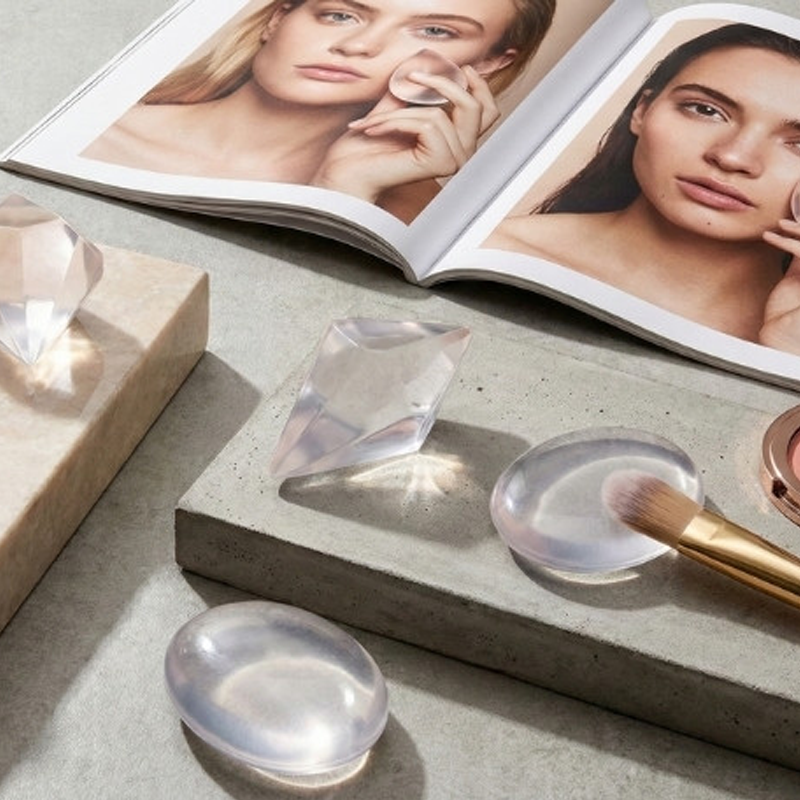
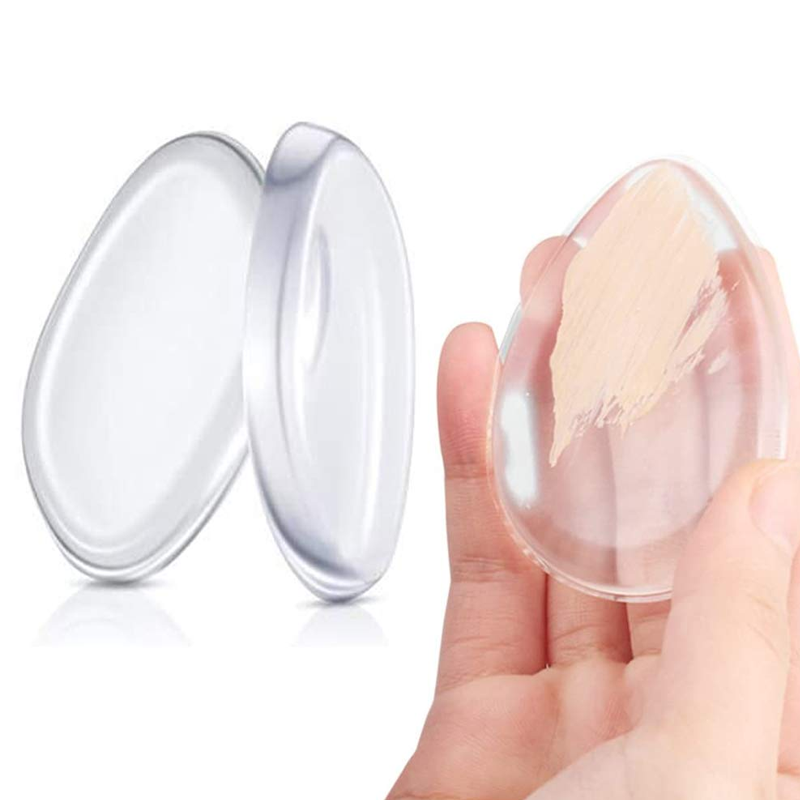
Silicone sponges and applicators don’t absorb product, so they reduce waste and are simple to sanitize. Smooth silicone surfaces give a different application technique (spreading/stippling instead of bouncing), and manufacturers can add micro-textures that improve blending or product pickup.
Skincare cleansing devices and massagers
Sonic cleansing heads, facial massage tips, and gua sha tools use ultra-soft silicone for gentle but thorough contact with skin. Silicone’s low thermal conductivity keeps surfaces comfortable during extended use, and its resistance to cosmetic residues ensures long service life.
Device housings and overmolded parts
Sonic devices, LED masks, and microcurrent tools require durable housings and watertight seals. Silicone overmolding enables a soft user interface bonded to rigid plastic or electronic modules, creating waterproof assemblies that are easy to clean.
Packaging components
Dropper bulbs, pump seals, gaskets, and soft-touch closures all benefit from silicone’s sealing and chemical resistance properties. Silicone maintains elasticity through countless open/close cycles and avoids swelling when exposed to oils and active formulations.
Hair and styling accessories
Heat-resistant grips, mats, and rollers use high-temperature silicone to protect users and surfaces. Silicone’s durability under repeated styling and cleaning is a distinct advantage in professional salon settings.
Manufacturing technologies and what they enable
As a manufacturer, we deploy several silicone production technologies that directly affect product quality, repeatability, and cost:
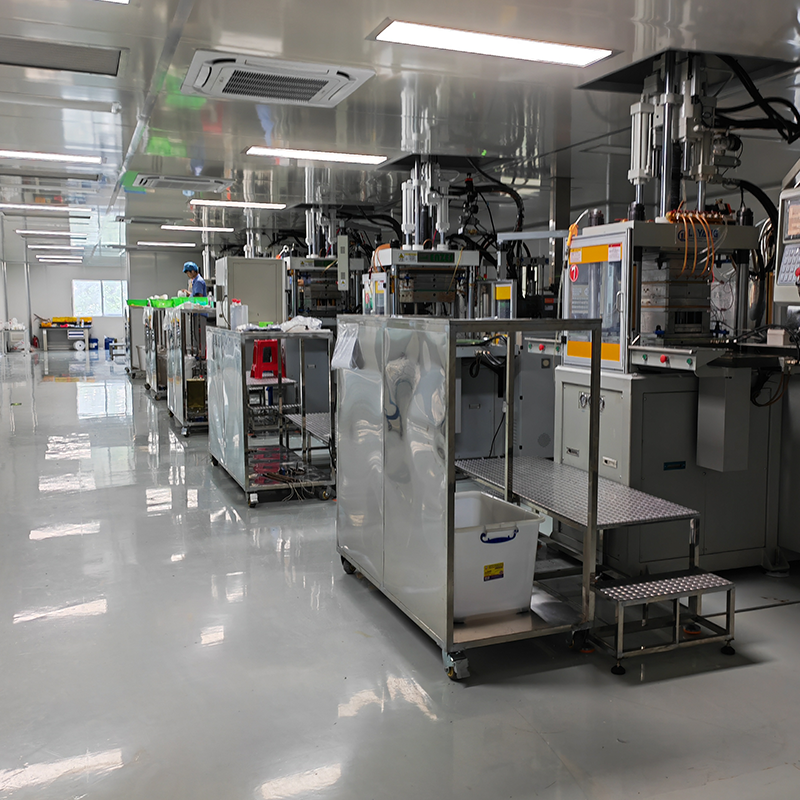
- Liquid Silicone Rubber (LSR) injection molding — ideal for high-volume, high-precision parts. LSR cures rapidly in heated molds and supports tight tolerances, multi-cavity tooling, and 2-shot/multi-durometer overmolding.
- High-Consistency Rubber (HCR) compression molding — used for larger parts or where tool costs for LSR are not justified. HCR is well suited to medium-volume production.
- Overmolding & insert molding — combine silicone with plastics or metal inserts in a single part, enabling sealed electronics, soft grips, and integrated seals.
- Two-component (2K) molding — permits combining silicone with other elastomers or rigid plastics during molding to create hybrid functionality without secondary assembly.
Quality control and regulatory expectations
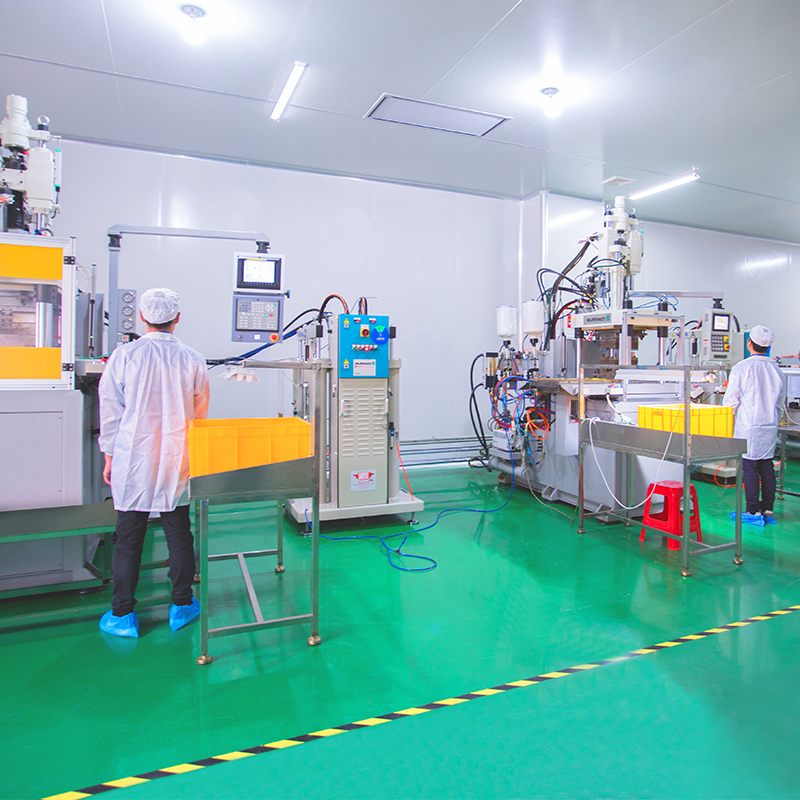
Beauty products — particularly those used on skin daily — require rigorous quality control. At Siliconepartner, our factory practices include:
- Material traceability and batch certificates for every lot of silicone raw material.
- In-house testing for Shore hardness, tensile strength, elongation, and leak/seal testing for overmolded assemblies.
- Clean manufacturing environments and contamination control for products intended for facial or infant use.
- Biocompatibility verification when required (ISO 10993 references) and support for cosmetic safety documentation.
- Process validation (mold qualification runs, SPC data collection) to ensure consistent quality across production batches.
If your market requires specific certifications (e.g., FDA-facing claims in the U.S., REACH declarations in Europe), your manufacturing partner should be able to support documentation and process controls that align with those regulations.
Design & material guidance for brands
To optimize product design for silicone manufacturing, consider these practical tips:
- Design for demold — include draft angles and avoid undercuts unless you plan for side-actions or flexible LSR geometries.
- Specify durometer profiles — determine which zones need soft touch versus structural rigidity; multi-durometer molding can solve this elegantly.
- Minimize post-processing — integrate textures, logos, and functional ribs into the mold to avoid trimming and assembly costs.
- Account for color and pigmentation — LSR pigments behave differently than plastic colorants; expect tighter process control and run-in testing for color stability.
- Plan for bonding or joining — if silicone must attach to plastics or metal, discuss mechanical interlocks or priming options early.
Sustainability and end-of-life considerations
Silicone’s longevity gives it a sustainability advantage over single-use disposables. One silicone cosmetic tool can replace many foam sponges or cotton pads over its life. Recycling infrastructure for silicone is growing, and some brands implement take-back schemes or partner with specialized recyclers. Manufacturing choices that extend product life — robust materials, easy-clean designs — are the most effective sustainability measures.
How we work with brands: OEM & custom service
As a full-service silicone manufacturer and OEM partner, Siliconepartner provides:
- Concept to production — product design consultation, rapid prototyping (including soft tooling), pilot runs, and full-scale LSR tooling.
- Custom service — bespoke coloring, branding, molded logos, and packaging integration.
- Scalable production — multi-cavity tooling for high volumes and flexible batch sizes for seasonal or test launches.
- Supply chain support — verified raw material suppliers, warehousing, and logistics to help you meet market demand reliably.
Common manufacturing challenges
- Flash and trimming — precise mold maintenance and optimized parting lines reduce flash; automated trimming reduces labor.
- Color matching — process recipes and masterbatch controls minimize batch-to-batch variance.
- Bonding to substrates — we recommend design features and material pairings that avoid weak bonds; when necessary, we qualify primer and adhesive systems in production trials.
- Regulatory claims — we support testing and documentation required for skin-contact products.

If you’d like to explore a new silicone beauty product or need a manufacturer who can deliver both high quality and tailored OEM solutions, our team at Siliconepartner is ready to help. We offer one-stop service from concept and prototyping through tooling, validated production, and global logistics. Reach out with your design or brief, and we’ll provide practical feedback, tooling options, and a production plan that suits your volume and commercial goals.
Thanks for reading — we look forward to partnering with you to bring your next silicone beauty innovation to market with the care and precision a factory-grade manufacturer provides. Contact Siliconepartner to start a custom service discussion and get a sample or quote from our high-quality production team.