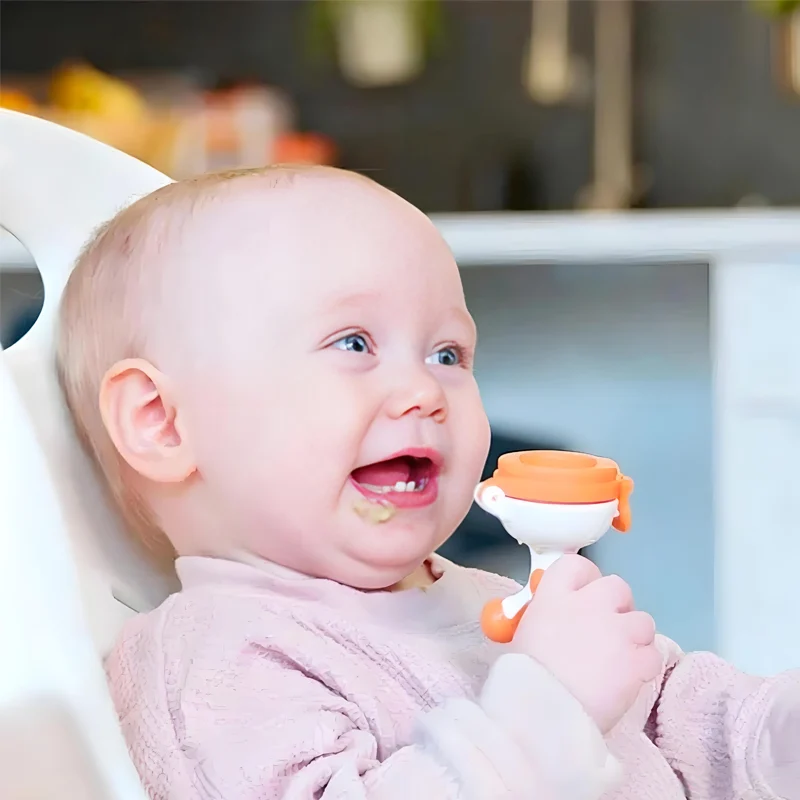
As babies transition from breast milk or formula to solid foods, parents face not only challenges in food selection but also in ensuring that babies receive proper nutrition, a healthy digestive system, and a smooth adaptation process. Baby food pacifiers are emerging as a critical tool in easing this transition, helping babies get acquainted with solid foods in a safe and controlled way.
These pacifiers are not merely simple feeding tools; their design is rooted in understanding babies’ physiological and psychological development during this crucial stage. In this article, we’ll delve into the scientific principles behind baby food pacifiers, their physiological effects, and how they support the healthy development of chewing, swallowing, and digestion in babies.
1. Design Principles and Functions of Baby Food Pacifiers
The core design of baby food pacifiers is based on babies’ gradual development of oral and swallowing reflexes during the food transition phase. They help babies safely explore the taste and texture of solid foods, while also taking into account their underdeveloped digestive system to avoid choking or indigestion.
1.1 Physical Design: Food Dispensed Through a Mesh
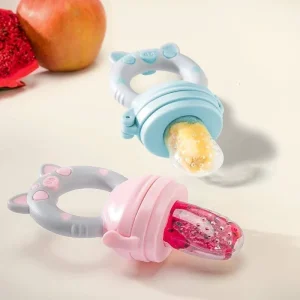
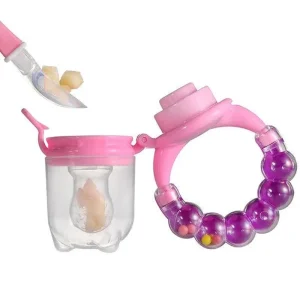
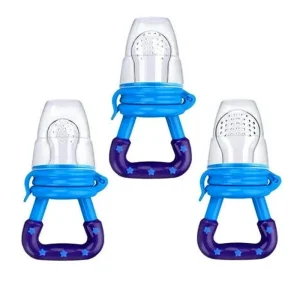
The nipple of a baby food pacifier typically features a fine mesh structure, into which parents can place food such as fruit puree, vegetable mash, or yogurt. As babies bite and suck on the pacifier, the food is gradually released through small holes in the mesh. This design mimics the natural breastfeeding process—combining sucking and chewing—helping babies adjust to eating solid foods in a safe way.
1.2 Material Choice: Safety and Durability
Baby food pacifiers are usually made from food-grade silicone or high-quality plastics. These materials are non-toxic, durable, and soft enough to suit babies’ oral needs. Silicone, in particular, is highly elastic and heat-resistant, allowing it to withstand multiple cleanings and sterilizations. The softness of silicone ensures that babies do not experience discomfort or excessive biting pressure, making it ideal for teething babies.
2. The Impact of Baby Food Pacifiers on Oral Development
As babies move from sucking to chewing, their oral muscles need to develop. This transition impacts not only feeding patterns but also the development of oral muscles, swallowing abilities, and the foundation for language development. Baby food pacifiers play an important role by providing a safe and controlled environment for babies to engage in oral activities that promote muscle development.
2.1 Promoting the Development of Oral Muscles
Studies show that at around six months, babies start engaging with solid foods, but their oral muscles—especially chewing muscles and tongue coordination—are still developing. Baby food pacifiers help babies exercise these muscles by encouraging them to gently bite and chew food. These exercises not only form the basis for effective chewing but also lay the groundwork for language development.
2.2 Supporting Proper Swallowing Reflex Development
Babies’ swallowing reflexes typically start to develop around six months, and they need gradual training to learn how to swallow solid foods. The soft texture of food dispensed through a baby food pacifier ensures babies don’t swallow large chunks at once, preventing choking or difficulty swallowing. The sucking and biting actions promote the development of proper swallowing techniques, reducing the risk of accidental ingestion.
2.3 Enhancing Adaptability to Different Textures and Tastes
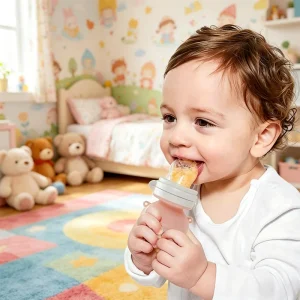
Unlike liquid feeding, solid foods come in various textures and tastes. Through a baby food pacifier, babies can safely experience different food consistencies—such as purees, chunky foods, and liquids. This not only improves babies’ acceptance of a variety of foods but also helps them adapt to different textures and tastes, encouraging a diverse diet.
3. The Role of Baby Food Pacifiers in Digestive System Health
The introduction of solid foods is not only crucial for babies’ oral development but also plays a key role in the healthy development of their digestive system. The type of food and feeding method during this transitional period directly impacts the growth and functionality of babies’ digestive systems, particularly their ability to adapt to solid food digestion and absorption.
3.1 Controlling Food Intake and Preventing Digestive Discomfort
Babies have small stomachs, and their digestive systems are still developing. Using a baby food pacifier helps control the amount of food babies consume in each feeding, preventing overfeeding or rapid intake that could lead to indigestion or tummy discomfort. The mesh design ensures that babies only take small amounts of food at a time, allowing their digestive systems to adjust gradually to solids.
3.2 Supporting Healthy Gut Microbiome Development
When introducing solids, babies’ gut microbiomes also start to diversify. Scientific studies suggest that introducing a variety of solid foods helps foster a more diverse gut microbiome and enhances babies’ digestive system’s tolerance to different foods. Baby food pacifiers allow babies to begin this process early, helping establish a healthier gut microbiome.
3.3 Reducing the Risk of Allergic Reactions
Research shows that timely introduction of solid foods not only supports gut microbiome diversity but can also reduce the risk of food allergies. By allowing babies to gradually experience different textures and ingredients through a food pacifier, they can adapt to various foods and develop a tolerance to common allergens, reducing allergic sensitivities.
4. Market Trends and Innovations in Baby Food Pacifiers
As more parents focus on their babies’ smooth transition to solids, baby food pacifiers are becoming increasingly popular. Various brands offer pacifiers made from different materials and designs to meet the diverse needs of parents. Some pacifiers use natural silicone or BPA-free plastics, ensuring safety; others include leak-proof designs to prevent food spillage; and some even offer adjustable flow controls to cater to babies at different developmental stages.
4.1 New Materials and Eco-friendly Designs
Currently, more and more baby food pacifiers are being made from eco-friendly materials like natural silicone and BPA-free plastics. These materials meet the growing demand from parents for safe and healthy products. With the increasing emphasis on sustainability, we can expect more environmentally friendly options in the future.
4.2 Personalization and Smart Features
Some premium brands have introduced smart baby food pacifiers that feature built-in sensors to monitor babies’ feeding progress and food temperature. These pacifiers can even remind parents when it’s time to adjust the food quantity. These innovations offer more personalized and high-tech solutions to support babies’ transition to solids.
5. Safety Guidelines and Common Issues in Baby Food Pacifier Use
Despite the many benefits of baby food pacifiers, correct usage is essential to ensure baby’s safety and health. Here are some safety guidelines:
- Food Selection: Always ensure that the food is soft and easily digestible. Avoid hard food particles, large chunks, or allergens.
- Cleaning and Sterilizing: Clean the pacifier thoroughly after each use to prevent bacterial growth. Use warm water and baby-safe detergents.
- Regular Inspection: Check the pacifier regularly for wear and tear. Ensure that the mesh bag or netting is intact to prevent the risk of choking.
Conclusion
Baby food pacifiers are designed not just for convenience and safety, but to support babies’ oral, swallowing, and digestive development during their transition to solid foods. By providing a safe environment for babies to practice oral movements, develop swallowing reflexes, and adapt to various food textures, these pacifiers play a vital role in ensuring babies’ healthy growth. As parents become more focused on their babies’ solid food transition, baby food pacifiers will undoubtedly continue to play a crucial role.
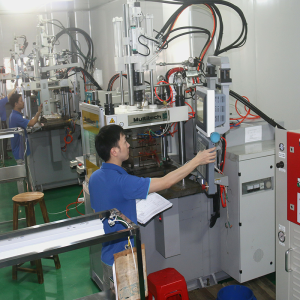
At siliconepartner, we manufacture high-quality baby food pacifiers, ensuring safety, durability, and functionality. Our products support healthy transitions for your baby from the early stages of solid food introduction.