
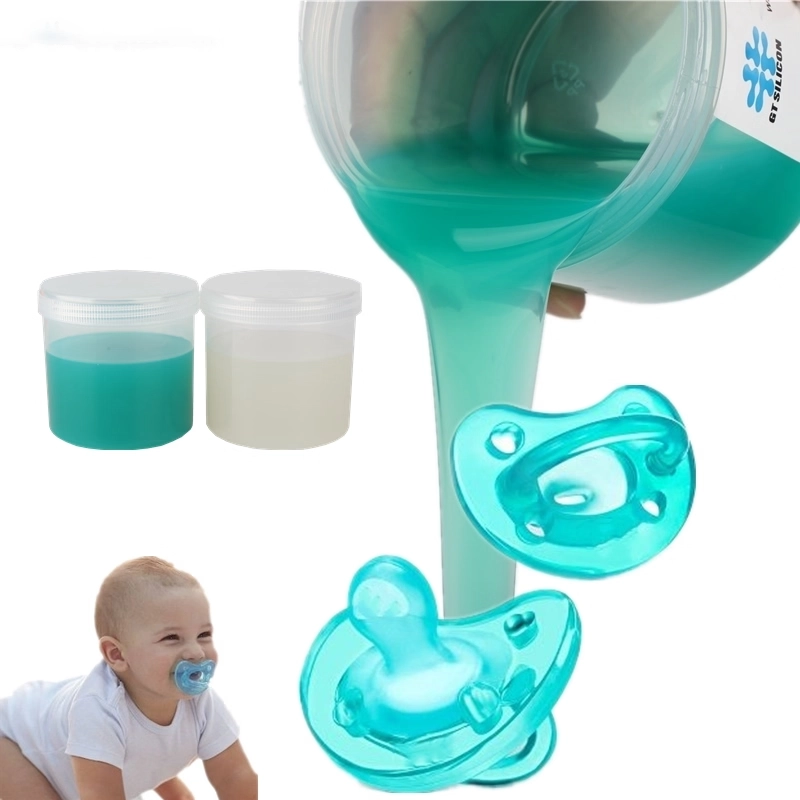
At Siliconepartner we guide B2B customers and brands on selecting, specifying, and manufacturing food-contact silicone products. This article explains which silicone grades are considered food-safe, how curing and processing affect purity, which regulatory tests matter, recommended temperature ranges, how to verify material purity, common kitchen applications, recycling/disposal guidance, and the manufacturing steps that deliver high-quality, compliant parts.
What It’s Made Of
Food-safe silicone is a family of polymeric materials based on siloxane (Si–O) backbones with organosilicon side groups. Two common commercial forms used in food-contact parts:
- Liquid Silicone Rubber (LSR) — two-component, platinum-cured, ideal for injection molding.
- High-Consistency Rubber (HCR / solid silicone) — sheeted compounds processed by compression or transfer molding.
Key: food-safe silicones are typically platinum-cured (addition-cure), which yields fewer extractables than peroxide-cured systems and avoids residual catalysts that can cause odors or discoloration.
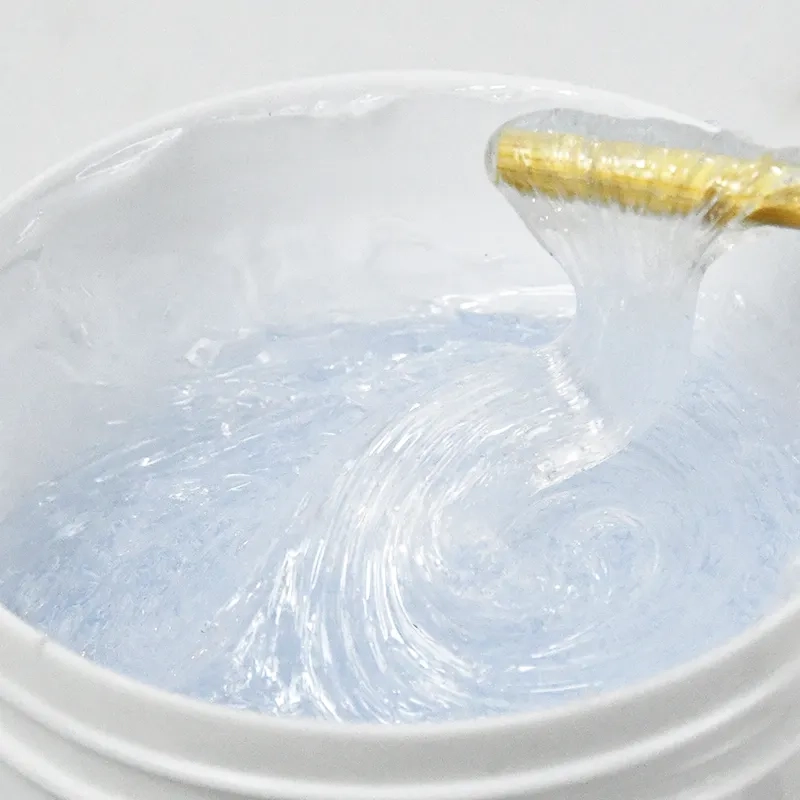
How Curing Methods Affect Purity
Cure chemistry directly impacts extractables and final purity:
- Platinum (addition) cure — minimal byproducts, excellent for food and medical applications. Preferred for baby products, cookware, and utensils.
- Peroxide cure — can leave volatile byproducts and requires careful post-cure to meet strict migration limits.
- Post-cure — controlled thermal post-cure reduces uncrosslinked oligomers and volatiles; critical to meet migration tests and odor specs.
Manufacturing controls (correct cure cycle, clean mixing, de-gassing, and post-cure) are as important as the raw compound.
FDA and European Safety Standards
When specifying food-grade silicone, require compliance and documentation:
- U.S. FDA — 21 CFR 177.2600 (rubber articles); compliant materials and supporting test reports.
- EU — Regulation (EU) No 10/2011 and national food-contact rules; LFGB testing in Germany is commonly requested.
- USP Class VI — for medical/implantable claims (often requested for baby nipples and medical-grade utensils).
- ISO 10993 / biocompatibility — for devices contacting mucous membranes or extended skin contact.
B2B buyers should insist on Certificates of Analysis (CoA), migration/extractables reports, and lot traceability.
Temperature Range and Stability
Food-grade silicones are chosen for a wide thermal window:
- Typical safe range: −60°C to +230°C (exact range depends on formulation).
- Withstands autoclaving, dishwasher cycles, microwave use (check specific product testing), and oven temperatures for many food applications.
- Thermal stability contributes to long service life and prevents breakdown products during normal use.
How to Check if Silicone Is Pure
Ask suppliers for objective documentation:
- Certificate of Analysis (CoA) — material grade, cure system, batch ID.
- Overall & specific migration testing — per relevant standards (FDA, EU) using food simulants and extraction conditions.
- Volatile organic compounds (VOCs) / headspace analysis — GC-MS screening for residuals that cause odor/taste.
- Heavy metals testing — ICP-MS or equivalent.
- Extractables profile — solvents, pH, temperature exposures to identify potential leachables.
- Mechanical tests — hardness (Shore), tensile/elongation, compression set to ensure performance.
- Biocompatibility reports — if targeted for infant/medical use (ISO 10993 / USP VI).
In production, verify incoming CoAs, retain samples, and run periodic lot testing.
Common Applications in the Kitchen
Food-safe silicone is used extensively where flexibility, heat resistance, and inertness are required:
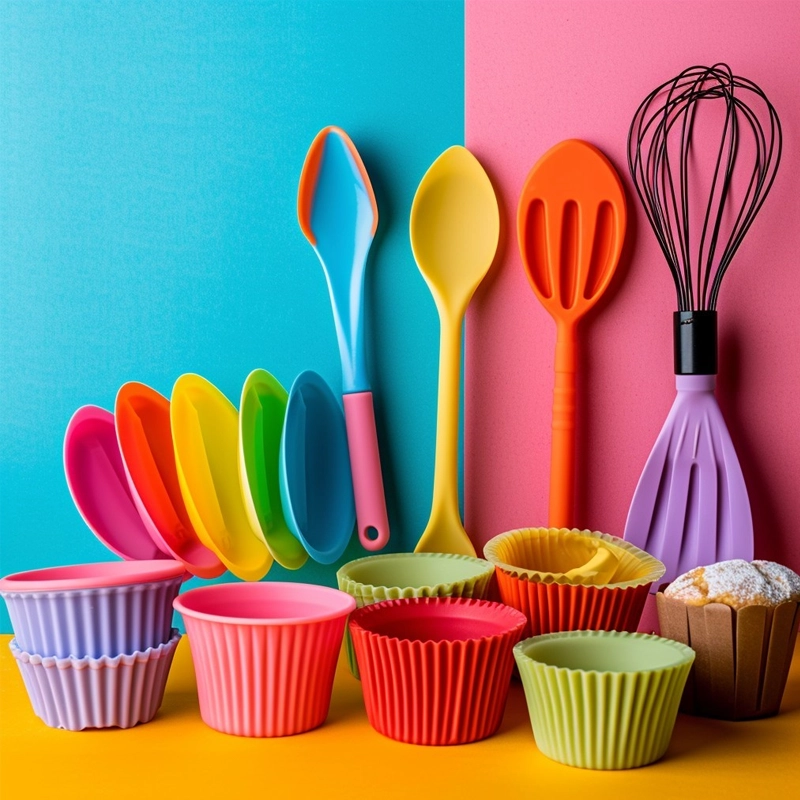
- Bakeware and molds (cakes, chocolates, specialty desserts)
- Utensils and spatulas (heat-resistant, non-scratching)
- Collapsible containers and travel bowls
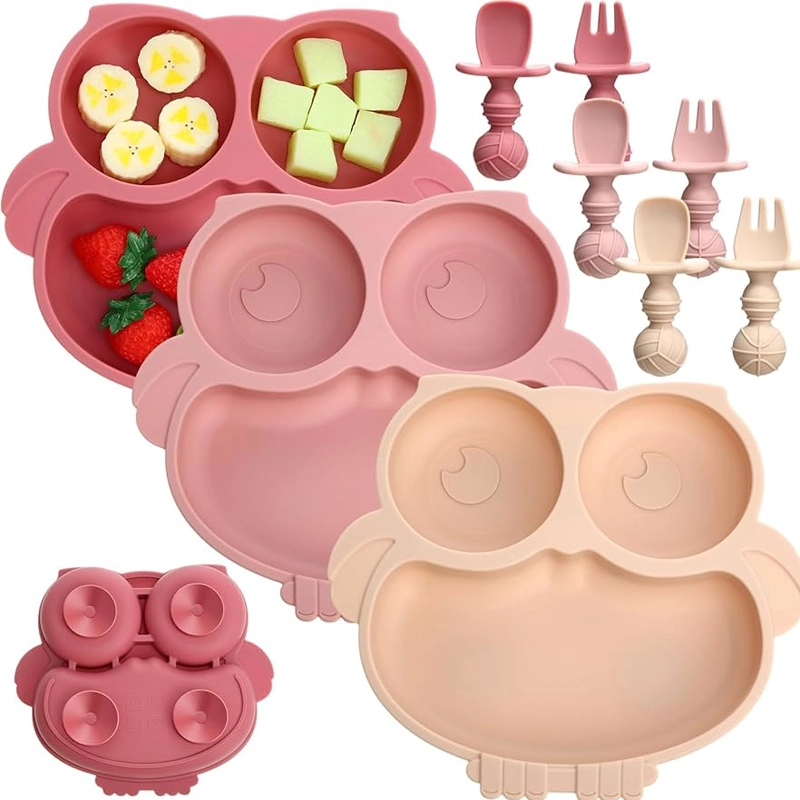
- Baby bottle nipples and pacifier components (medical-grade silicones)
- Ice cube trays, measurement markings, and sealing gaskets
- Sealing rings for food processors and vacuum lids
For each application define required tests (e.g., oven stability for bakeware; migration & biocompatibility for nipples).
Recycling and Disposal
Silicone is not widely accepted in curbside recycling but is durable and long-lived, which reduces waste compared to single-use plastics. Options:
- Industrial take-back / specialty recycling schemes (where available) regenerate silicone into other uses.
- Encourage design for longevity and serviceability (replaceable parts, modular electronics).
- Dispose through normal waste streams where no local silicone recycling exists; document eco-claims carefully.
Manufacturers should explore circular options and advise customers transparently.
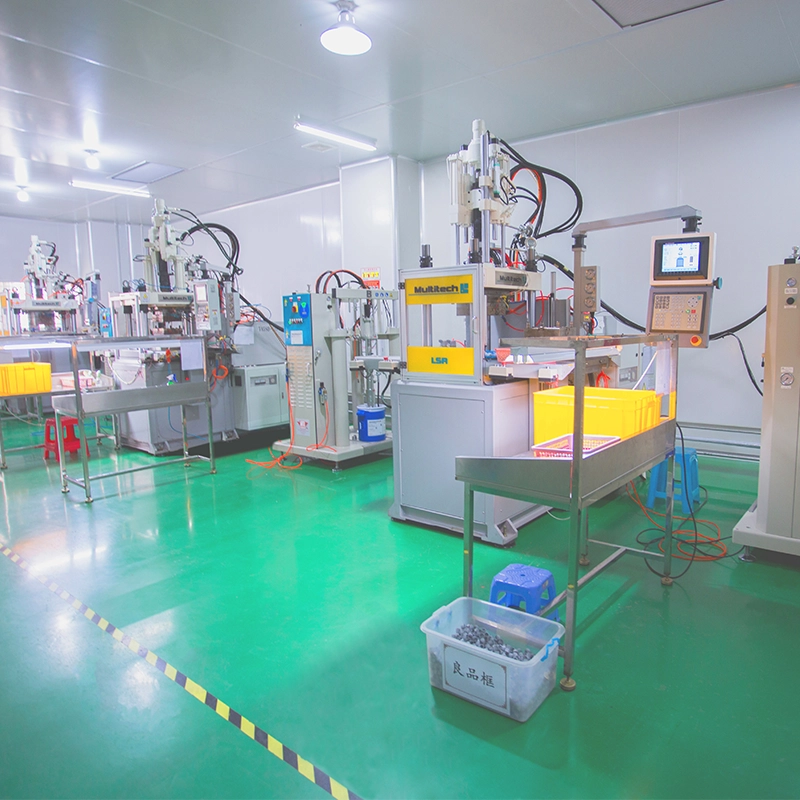
Manufacturing & Process Controls (how we deliver safe silicone products)
High-quality food-safe silicone products require precise process control:
- Compound sourcing & qualification — platinum-cured LSR/HCR from validated suppliers with CoAs.
- Mixing & de-airing — controlled two-roll milling or metered LSR mixing; vacuum de-airing minimizes voids.
- Tooling — CNC steel/aluminum molds with venting and polished cavities for clean demold.
- Molding — LSR injection molding for one-piece, high-cavity production; compression molding for thicker parts.
- Post-cure — time/temperature-controlled ovens to reduce extractables.
- Cleaning & washing — automated washing lines for food-contact parts to remove residues.
- QC & traceability — visual, dimensional, mechanical, and chemical batch testing; CoA issuance and retained sample program.
- Packaging — cleanroom or sanitary packing options and labeling to support regulatory audits.
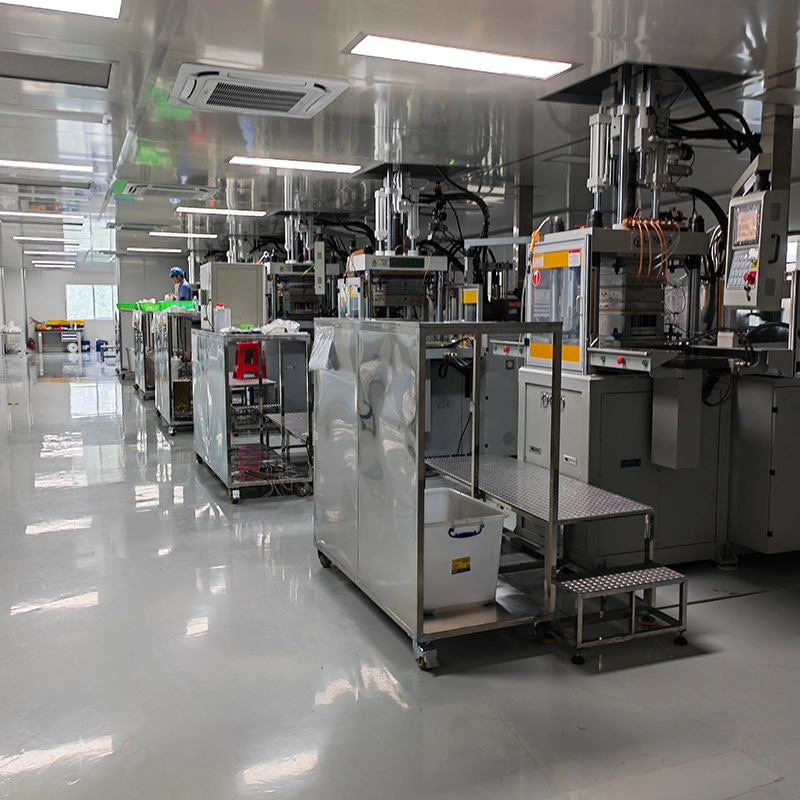
This layered control (material + process + testing) ensures compliance and consistent product quality.
Conclusion
Food-safe silicone is typically platinum-cured LSR or high-quality HCR, processed under strict manufacturing controls and validated by migration, VOC, and mechanical testing. For B2B sourcing, insist on CoAs, migration/extractables data, ISO/USP certifications where applicable, and a documented post-cure and wash process. When specified and manufactured correctly, silicone offers unmatched combination of heat resistance, flexibility, inertness, and durability for kitchen and infant applications.
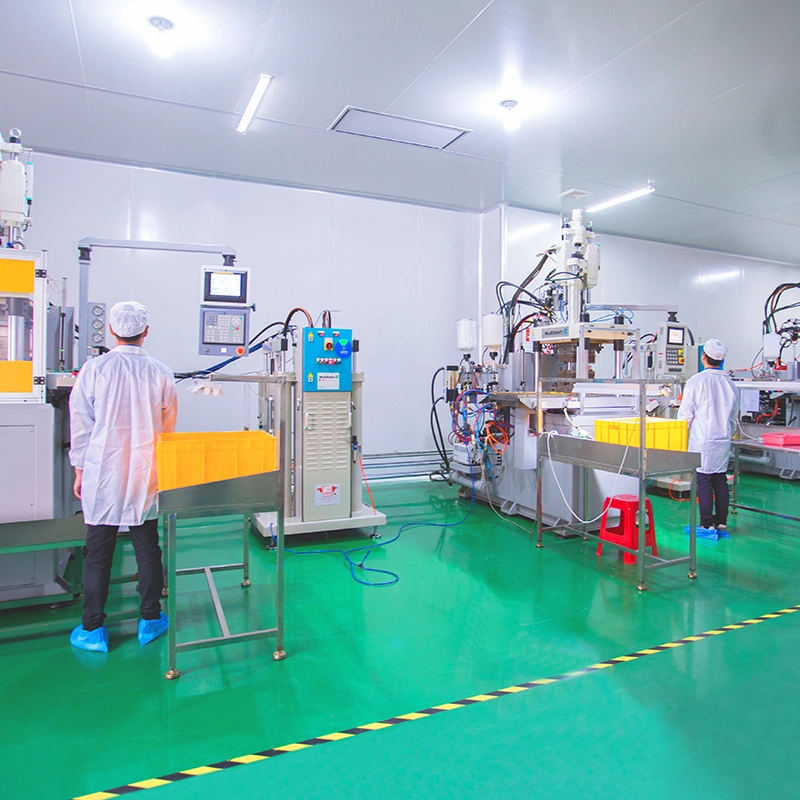
At Siliconepartner, we provide end-to-end OEM service and one-stop manufacturing for custom silicone products—material qualification, DFM, tooling, LSR molding, post-cure, testing, and compliant packaging.
Ready to develop a food-safe silicone part or evaluate suppliers? Contact Siliconepartner for a technical consultation, sample plan, and compliance package. We’ll help you choose the right compound, validate tests, and scale production with confidence.